


Father’s Day is meant to be a celebration — a moment to honour the dads, stepdads, granddads, and father figures who show up every day.
But just a few days later, RUOK? Day rolls around, and it’s a reminder that not every dad is doing okay.
Behind the socks and BBQ tools, many fathers are carrying a mental load that’s invisible — and it’s affecting not just them, but their kids too.
The pressure dads don’t talk about
Being a dad in 2025 isn’t just about providing. It’s about being emotionally present, supportive, patient, and resilient — often while juggling work stress, financial pressure, relationship challenges, and personal identity shifts.
And yet, many fathers still feel like they have to “tough it out.”
- Around 1 in 5 fathers report depression or anxiety since having children [1].
- 9% of dads experience depression during the postnatal period [1].
- 3% of fathers report serious psychological distress while raising children [1].
These numbers matter. Because when dads struggle silently, the ripple effects reach far beyond them.

How dad’s mental health affects kids
Research shows that a father’s mental wellbeing is directly linked to their child’s development:
- Children of dads with poor mental health are more likely to experience emotional and behavioural issues [1].
- Fathers with better mental health report more positive interactions, greater parenting confidence, and stronger emotional bonds with their children [1].
- Kids thrive when their dads feel supported — by partners, workplaces, and communities [1].
And yet, many fathers still don’t feel safe or supported enough to speak up.
Why RUOK? Day matters for dads — but isn’t enough
RUOK? Day is a great reminder to check in. But for dads, especially those dealing with mental health challenges, one question once a year isn’t going to cut it.
What they need is:
- Consistent support — from partners, friends, workplaces, and health professionals.
- Safe spaces to talk about the real stuff — not just parenting wins, but fears, failures, and frustrations.
- Practical help — not just awareness, but access to services, time off, and mental health care.
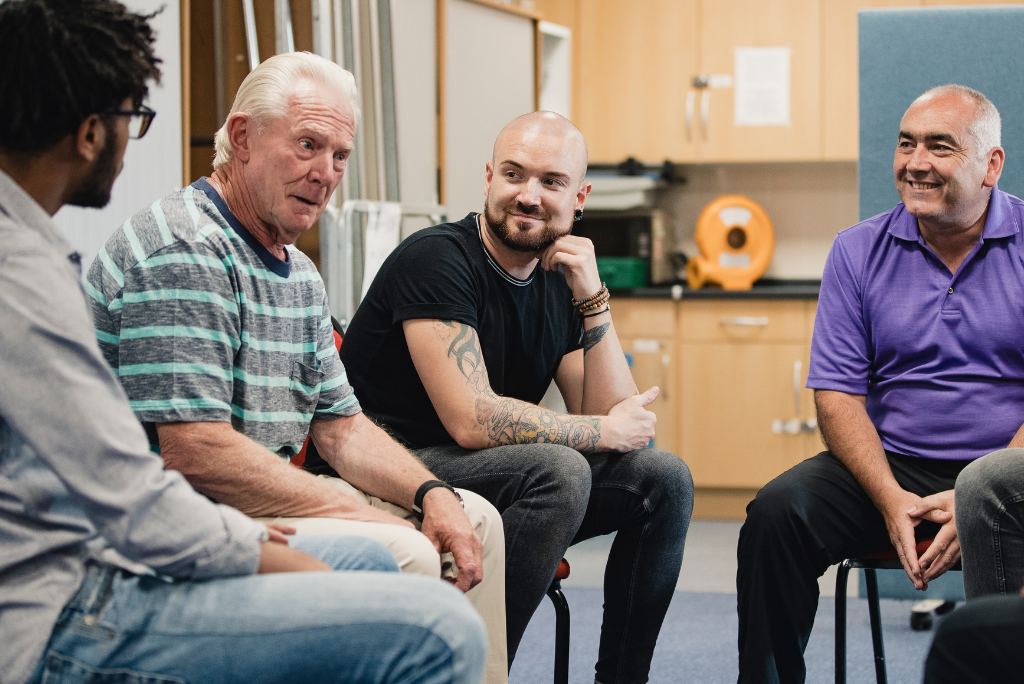
Tips for fathers: You don’t have to do it alone
If you’re a dad and you’re struggling, here’s what you can do:
Check in with yourself
You don’t need to hit rock bottom to ask for help. If you’re feeling overwhelmed, irritable, disconnected, or exhausted — that’s enough.
Talk to someone
A mate, a GP, a counsellor — anyone. You don’t have to have the “right words.” Just start.
Use Trusted Resources
- MensLine Australia – 1300 78 99 78 | mensline.org.au
- Beyond Blue – 1300 22 4636 | beyondblue.org.au
- Head to Health – headtohealth.gov.au
Remember: Your Mental Health Shapes Theirs
When you take care of yourself, you’re modelling emotional resilience for your kids. You’re showing them that it’s okay to feel, to struggle, and to seek help.
Tips for partners, friends, and colleagues
Want to support a dad in your life? Here’s how:
- Ask more than once. If he shrugs it off, ask again later.
- Don’t judge or fix. Just listen.
- Encourage breaks. Time alone, time with mates, time to recharge.
- Share resources. Sometimes the hardest part is knowing where to start.
- Check in after Father’s Day. The pressure to “perform” as a great dad can be exhausting. Be there when the spotlight fades.

Celebrate dads by supporting them
Father’s Day is a beautiful moment to say thanks. But RUOK? Day reminds us that gratitude isn’t enough if we’re not also offering support.
This year, we can do both. Celebrate the dads who show up — and make sure they know it’s okay to fall apart sometimes too.
Ask “R U OK?” — and mean it. Follow up. Listen. Act.
Because when dads are supported, kids thrive. Families thrive. Communities thrive.
And that’s worth more than any gift.
Sources:
- Emerging Minds – Fathers’ Mental Health and Parenting [1]
- Australian Institute of Family Studies – Ten to Men Report [2]